
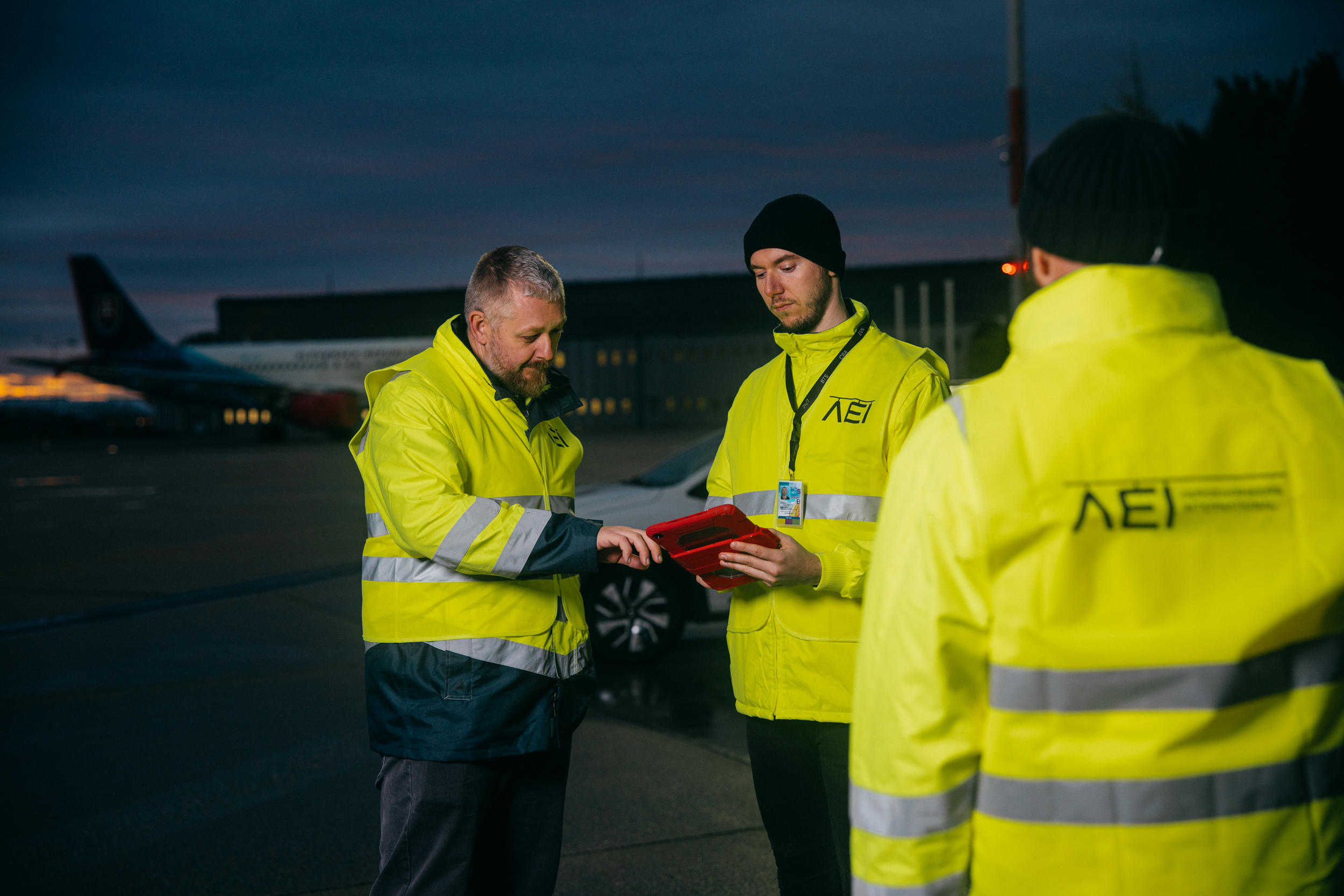
Communication as a Tool for Safety
As a safety champion tool, communication is not about using big words or giving exciting speeches.
Why communication is so important in maintenance?
Verbal and written communication can support situational awareness of:
- what each team member is doing
- and how they can best work together to complete the tasks.
Unfortunately, miscommunications are often a contributor to incidents/accidents and injuries in the workplace.
Not only do technicians need to communicate within the maintenance department, but they must also communicate well with employees in other departments, such as flight crews, cabin crew, MCC, handling companies …
Example: adequate and complete information from pilots allows maintenance personnel to diagnose and resolve the problem faster; in turn, pilots feel more comfortable with airworthiness when maintenance reports are complete and communications are thorough.
On the other hand, effective communication supports:
- shared situational awareness
- coordination between team members
- early detection of anomalies

When we talk about effective communication, it is clearly based on the principles known as Grice's maxims (Paul Grice – philosopher). They are based on the Cooperative Principle, which suggests that participants in a conversation typically work together to ensure effective communication.
For communication to be effective, it is good to be aware of possible failures and try to prevent them.
Non-linear or “Narrative” Responses
People respond with stories, context, or justification instead of directly answering the question. These styles avoid direct yes/no answers and lean into explanations.
“Answer Avoidance” / “Evasive Responses”
A known phenomenon in communication psychology: The person gives a related response, but not the answer to the actual question. It’s unintentional in most cases — not deceit — it’s a habit.
Failure of “Closed-loop Communication”
In aviation, maintenance, and medical operations, there is a formal term: Closed-loop communication = Asking a direct question → Receiving a direct answer → confirming. When people reply with “stories,” the loop is broken
Grice’s Maxims — Violating the Maxim of Relevance
In linguistics, people should answer exactly what is asked when the context requires it. When they don’t, they violate: Grice’s Maxim of Relation (Relevance) — Provide only information relevant to the question.
In operational environments, violating this maxim causes ambiguity, errors, and delays.
The question is why this actually happens...
- Habitual conversational style – people don't switch to “professional/operational mode” – direct answers, closed-loop format, absence of narrative….
- Discomfort with direct answers - Some people feel a “yes/no” is too exposed or feels like admitting fault. So, they “wrap” the answer in explanations.
Example:
Wrong vs. Correct Question:
“Did you install components A and B?”
Incorrect (Narrative): “Well, B was missing and yesterday we didn’t get the package, and A was okay so I just…”
Leaves the status of A/B unclear.
Correct (Operational): “A: Installed. B: Not installed — missing part.” Complete, structured, decision ready.
Sequence Consistency
Always answer multi-part questions in the same order as asked.
Example: Question: “Did you check X, Y, Z?”
Correct format: ▪ “X: Yes.” ▪ “Y: No.” ▪ “Z: Yes.”
Never reorder or skip items!

What are the expectations from both sides for communication to be truly effective?
Supervisors:Technicians/Operators:
Model the standardUse the direct-answer format
Request structured answersAsk for clarification when needed
Correct narrative responsesKeep explanations short and relevant
Example of ASRS (Aviation Safety Reporting System) maintenance events:
Poor coordination in 17% of ASRS maintenance events.
Of those events, 79% occurred within a single department.
Frequent errors involved: not delivering information, sending wrong information, and lack of responsibility
In one particular coordination task, shift turnover, was involved in 51% of all maintenance communication errors
When inter-departmental communication errors occur, they frequently involve conflicts about aircraft airworthiness and/or the information provided in logbooks.
Able communicators can:
- Adjust their tone and style according to their audience
- Listen, understand and act effectively on instructions
- Explain complex issues to co-workers and customers alike
- Read and understand documents
- Write in an understandable manner, especially in maintenance records